

The story of the Prodigal Son is told as a lesson in forgiveness. But beneath the surface, it holds a deeper psychological truth: the battle within ourselves — between our impulses, our intelligence, and us trying to hold it all together. Upon closer examination, it mirrors Sigmund Freud’s model of the human psyche: the id, ego, and superego.
The Prodigal Son’s Story: A Quick Overview
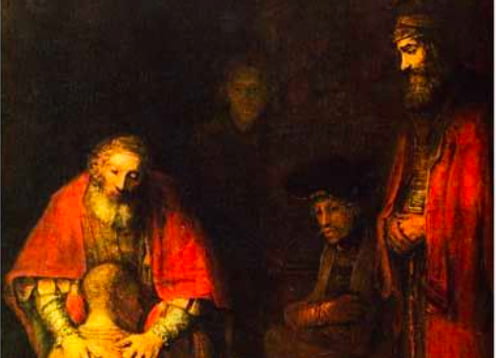
This is a story of a wealthy father with two sons, living on a big, fancy estate. The younger son is itching for freedom and says, “Father, give me my inheritance now, I’m not waiting.” That is pretty gutsy.
The father, probably gutted but keeping it cool, splits his fortune and hands the kid his cut. The young guy bolts to some flashy city, blowing the cash on epic parties, sketchy friends, and wild nights. It’s all fun until the money’s gone, and a famine sweeps in.
Suddenly, he’s stuck slopping pigs, starving, his pride in tatters. Sitting in the muck, he has a moment of clarity: “Even Dad’s hired hands are living better than this.” So, he rehearses a mea culpa, swallows his shame, and heads home, hoping for a servant’s bunk at best. But get this—Dad’s been scanning the horizon daily, heart aching. When he sees that familiar figure, he runs—no hesitation, robes flapping—and engulfs his son in a hug. No grilling, no “I told you so.” Just pure joy. He calls for a feast, new clothes, even a ring, shouting, “My boy was lost, and now he’s found!” Meanwhile, the older son, who’s been holding down the fort and working his tail off, hears the party and flips. “I’ve been loyal, Dad! Where’s my celebration?” He’s stewing outside, feeling totally shafted. Dad comes out, voice steady, and says, “You’ve always had my love, son. But your brother was gone, and now he’s back. Come join us.” The music’s blaring, the feast is on, but the story doesn’t say if the older brother steps inside or stays out, nursing his grudge. It’s a gritty story about messing up, coming home, and figuring out what love and family are really about.
Freud’s Structure of the Mind

Sigmund Freud proposed that our personality is divided into three parts:
- Id: The raw, impulsive part of us. Focused on pleasure, craving, and immediate satisfaction.
- Superego: Our internalized sense of right and wrong — shaped by society, culture, and upbringing. It’s strict, judgmental, and perfectionist.
- Ego: The balancing force — the part of us that navigates reality, trying to meet the needs of both the id and superego in a practical way.
This internal dynamic plays out every day: one part of us wants what it wants now, another part scolds us for even thinking about it, and somewhere in the middle is the “you” trying to manage it all.
Mapping the Prodigal Son to the Psyche
- The Younger Son = The Id
He acts on impulse. He wants his freedom, his wealth, his pleasure. No concern for rules, consequences, or responsibilities. His downfall is a classic crash of unchecked desires. - The Older Brother = The Superego
He stays, works, follows every rule — and becomes self-righteous. He’s the voice that says “I deserve more because I did everything right.” He cannot forgive, because he’s trapped in comparison and control. - The Father = The Ego / The Higher Self
The father represents balance, compassion, and maturity. He sees the full picture. He understands that the younger son had to fail in order to grow — and that the older son’s bitterness is its own kind of prison. The father doesn’t pick sides. He invites both sons into wholeness.
The Psychological Journey: Why It Matters
The younger son’s fall wasn’t a failure — it was a necessary descent. Sometimes we have to act on impulse, get burned, feel lost, and hit rock bottom to realize what truly matters. That’s how the id learns: through experience, not theory.
The older brother followed the path but didn’t grow. He did what he was told, but never understood why. He’s stuck in resentment because he never left — and never truly questioned.
The father, standing in the middle, shows us what integration looks like: the ability to understand both chaos and order, desire and discipline, and still choose compassion.
Final Thoughts
The story of the Prodigal Son isn’t just about family or religion. It’s a timeless map of the human psyche. At different times, we are all the younger son, the older brother, and — hopefully — the father.
- We chase pleasure.
- We cling to rules.
- We learn, return, and evolve.
And maybe the true message is this:
You can’t become whole by staying safe. You have to leave, fall, get lost — and then, with humility, return home transformed.